
Last updated November 4, 2026
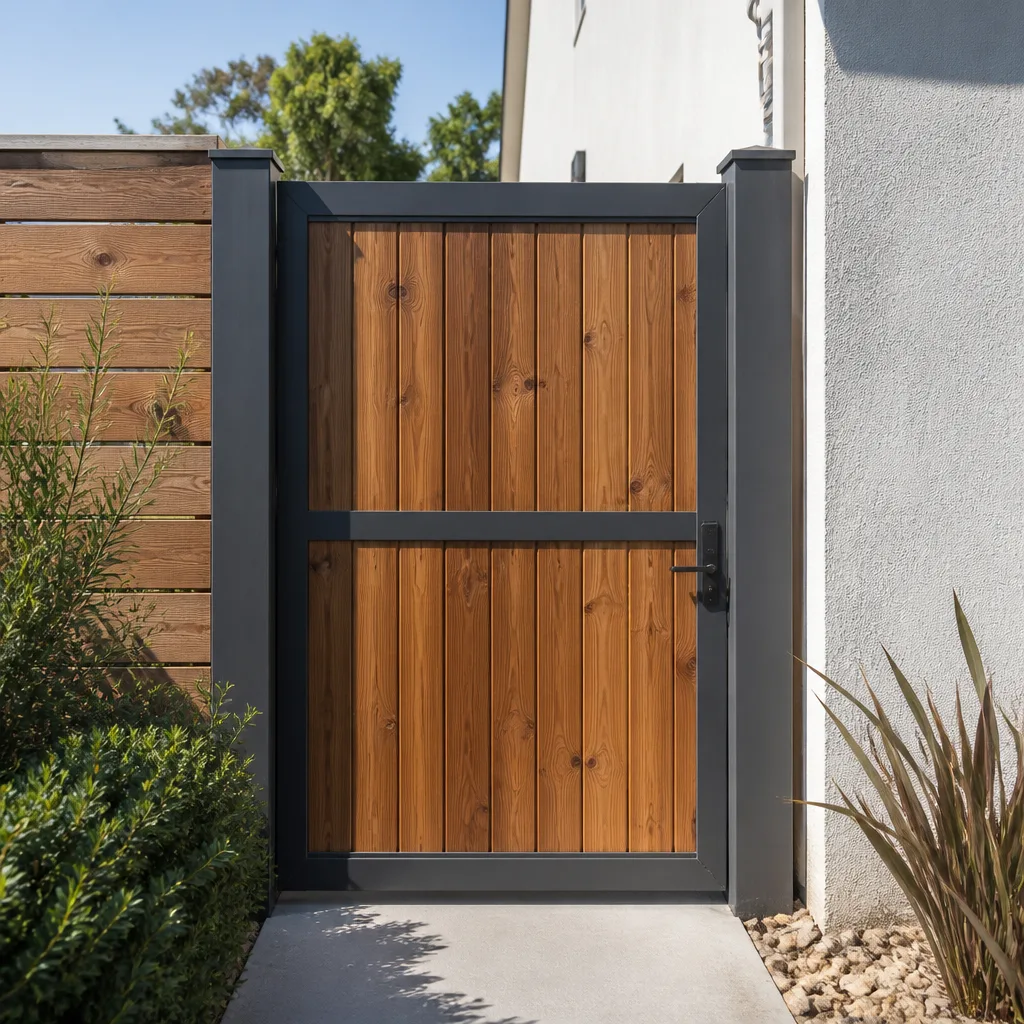 Wood & steel frame
 Wrought iron
 Farm & ranch
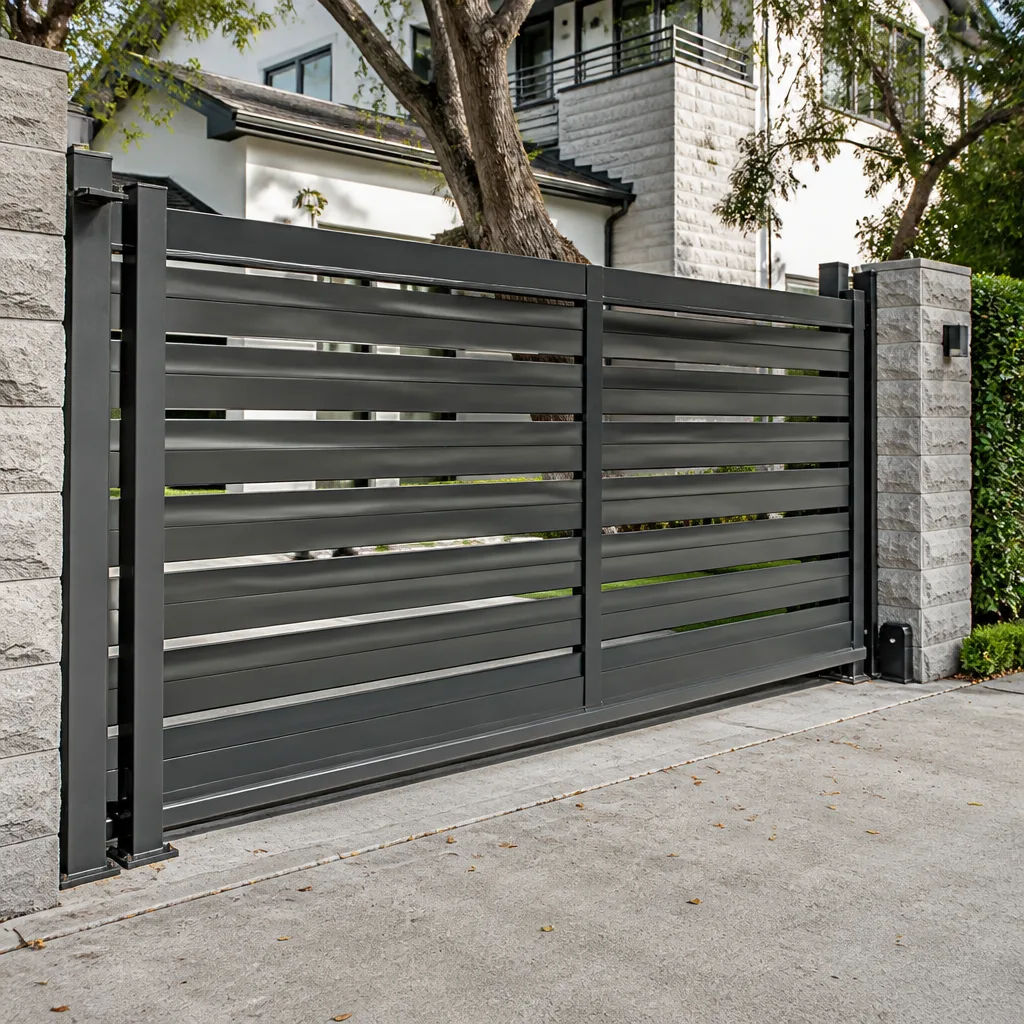 Sliding driveway gates
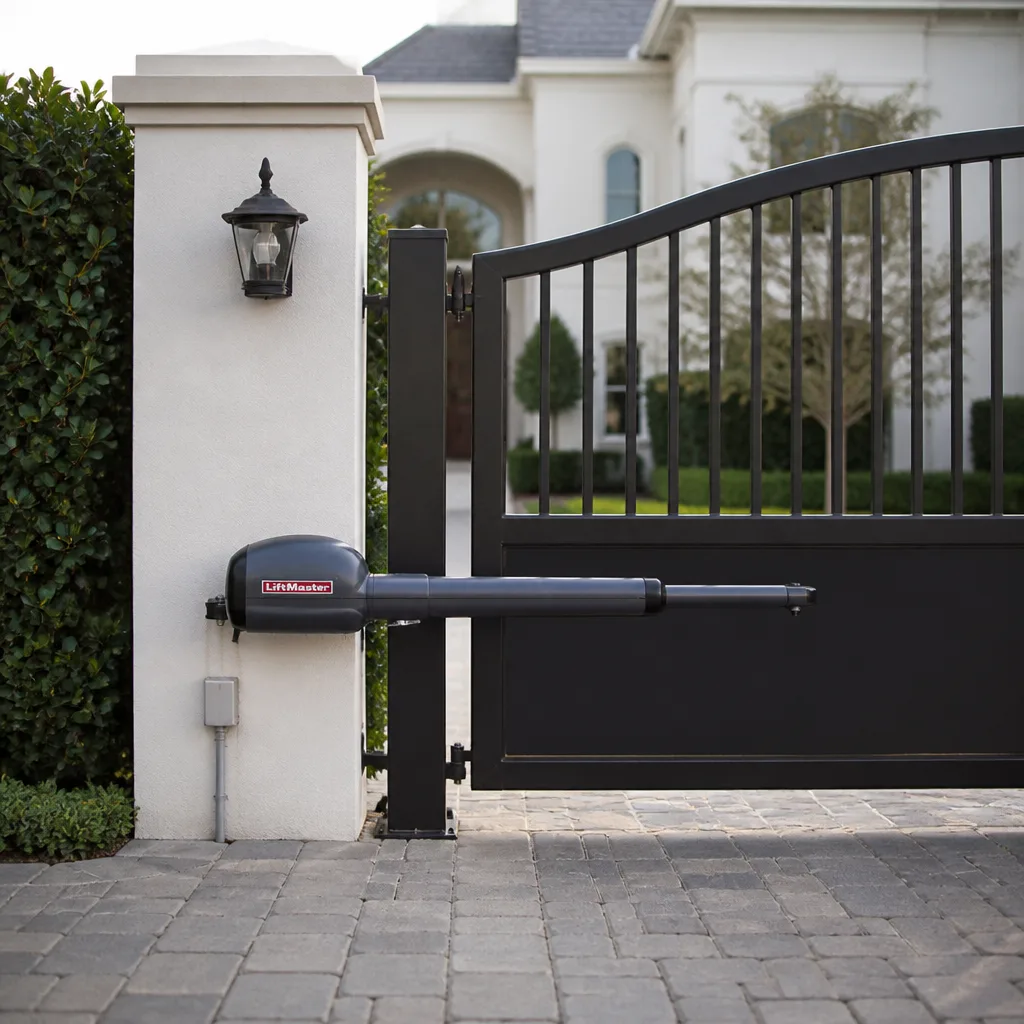 LiftMaster operators
Free on-site gate assessment - hinges, posts, and your LiftMaster or Nice gate operator checked before anything is quoted
The assessment is free and the quote is the invoice.
Get your free estimateSeasonal Gate Repair Care for Lakewood: Year-Round Homeowner’s Guide
October is the month most Lakewood homeowners call us about a gate that simply stopped working, and the reason surprises them. It isn’t cold weather. It’s the shift from the damp marine layer months into dry Santa Ana wind season. Debris gets driven into track systems, humidity swings stress control boards, and components that limped through summer finally give out. This guide lays out exactly which gate problems peak in which Lakewood seasons, what to check before each one arrives, and the five maintenance tasks that prevent most emergency calls altogether. If you own an automatic gate in Lakewood, this is your year-round plan.
Styles & brands we work with
- Wrought iron
- Wood & steel frame
- Farm & ranch
- Sliding driveway gates
- LiftMaster operators
Quick Answer
Seasonal gate care in Lakewood means doing specific checks before Santa Ana winds, after heavy rain, during summer heat waves, and through the marine layer months. The most important tasks are clearing track debris before wind events, inspecting seals and hinges for corrosion after the humid season, testing your battery backup before summer power fluctuations, and exercising the manual release mechanism twice a year. Most failures are predictable, and a short seasonal routine prevents them.
Table of Contents
- Why Lakewood’s Climate Shapes Gate Maintenance Differently
- Marine Layer Months (May – August): Humidity, Corrosion, and Motor Seals
- Santa Ana Wind Season (September – November): The October Failure Peak
- Post-Rain Inspection Priorities for Clay-Heavy Soil
- Summer Heat and Battery Backup Systems
- The Seasonal Task Most Guides Skip: Testing the Manual Release
- A Month-by-Month Lakewood Gate Maintenance Schedule
- Common Mistakes to Avoid
- When to Call a Professional
- Frequently Asked Questions
- The Bottom Line
Why Lakewood’s Climate Shapes Gate Maintenance Differently
Lakewood sits in a climate band that most generic gate maintenance advice doesn’t address. We don’t get freeze-thaw cycles that crack concrete or snow loads that bend steel. What we do get is a repeating pattern: months of overnight marine layer moisture, then months of dry offshore wind, interrupted by short periods of intense rain. Each phase stresses different gate components.
The marine layer that rolls in most nights between May and August keeps morning humidity high, even when afternoon temperatures climb. That moisture condenses on cool metal surfaces, works into motor housings, and accelerates corrosion on untreated steel tracks and hinge pins. Gate systems designed for drier inland climates often show wear here faster than a homeowner expects. We’ve opened control boxes in Lakewood with visible moisture staining on the circuit board, and the homeowner had no idea water was getting in. The board still worked, but it was a failure waiting for the right humidity swing.
Then the pattern flips. When Santa Ana winds start in September and October, the air dries out suddenly. Wood that swelled during the humid months contracts. Metal that expanded in summer heat shrinks. Control boards, already weakened by months of humidity, face rapid temperature and moisture cycling. That’s the October failure peak.
What this means for a homeowner: the maintenance tasks that matter in Lakewood aren’t the same as the generic “lubricate everything twice a year” advice. They’re tied to specific seasonal transitions. Knowing which season stresses which part is the difference between a gate that runs for years without drama and one that strands you at the driveway entrance on a Sunday morning.
Marine Layer Months (May – August): Humidity, Corrosion, and Motor Seals
Between May and August, overnight marine layer humidity in Lakewood regularly reaches levels that affect gate hardware in ways you can’t always see. The areas most affected are steel tracks, hinge pins, motor housing seals, and the small wiring connections inside operator boxes. Here’s what to monitor during these months.
Track and Hinge Corrosion
Steel tracks on sliding gates are the most vulnerable. You may notice a fine surface rust beginning along the track edges, especially near the ground where moisture lingers longest. Light surface rust is cosmetic. Pitting is not. If the track surface develops roughness, the gate rollers begin to drag, which increases motor load, which shortens operator life.
Hinge pins on swing gates take similar moisture exposure. A hinge that squeaks during the marine layer months isn’t just noisy; it’s telling you the internal lubrication has washed out or broken down and metal is wearing on metal. Left alone through the summer, a worn hinge changes the gate’s geometry slightly. That minor shift is enough to throw off limit switch calibration on an automated system.
Motor Housing Seals
One of the most common findings we see when doing gate repair work in Lakewood is a failed seal on the motor housing. Seals dry out, crack, or get knocked loose by gate movement. Once a seal fails, marine layer moisture enters the housing nightly. The motor itself may tolerate some moisture, but the control board and limit switches inside the housing will not. You can check seals yourself: look for visible cracks, gaps, or a loose fit around the housing cover. If the cover doesn’t seat firmly, water is getting in.
During these months, a monthly visual check of the operator housing, tracks, and hinges is enough for most residential gates. Wipe down visible moisture from the operator exterior after particularly damp mornings. Do not spray water into the housing. A dry rag is the tool to use.
Santa Ana Wind Season (September – November): The October Failure Peak
We see more operator failures in October than any other month in Lakewood. The common denominator is the Santa Ana wind pattern. It brings two things: debris and rapid humidity swings.
First, the debris. Santa Ana winds blow dry leaves, small branches, dust, and general yard litter directly into gate track channels. A sliding gate has an open track that faces whatever the wind carries. Even a small accumulation of debris in the track creates drag. The motor compensates by pulling harder. Limit switches that were calibrated for a clean track now see increased resistance, and over time the system either faults out or burns out the motor’s capacitor. We’ve seen gates that operated flawlessly all summer fail within two weeks of the first strong Santa Ana event, and the cause was always the same: a track full of compacted debris.
The second factor is the humidity swing. The marine layer months keep control boards in a relatively stable, humid environment. When Santa Ana winds arrive, humidity can drop from 70% to under 15% in hours, while daytime temperatures swing widely. Circuit boards expand and contract at different rates than their solder joints. A board that was already compromised by moisture exposure now faces mechanical stress. This combination is what makes October the statistical peak for control board failures in Lakewood.
Your pre-Santa Ana checklist should include:
- Clear the entire track channel. Use a brush or vacuum, not a pressure washer, and remove every bit of debris, including the compacted material at the track ends.
- Inspect the limit switches for debris accumulation. A limit switch that can’t fully depress will not signal the operator to stop, and the gate will fault.
- Test the auto-reverse sensitivity. Stand clear of the gate path and place a small object in the gate’s closing path. The gate should reverse on contact or before contact, depending on the system. If it doesn’t, the sensitivity setting needs adjustment.
- Check the manual release mechanism. You’ll need it if the power fails during a wind event, and the worst time to discover it’s seized is during an actual emergency.
- Verify that the operator housing cover is fully seated and latched. Wind-driven dust will find any gap.
If your gate has a Viking or Linear operator, these checks are especially important in fall. The control board layouts on those systems are sensitive to dust accumulation, and a quick internal inspection before wind season can prevent a dead board in November.
Post-Rain Inspection Priorities for Clay-Heavy Soil (December – March)
Lakewood’s heaviest rain typically arrives between December and March, and when it does, the region’s clay-heavy soil behaves in a specific way. Clay absorbs water slowly and releases it slowly, which means the ground around gate posts doesn’t just get wet; it swells and shifts as it absorbs moisture over days, then contracts as it dries. This seasonal ground movement is enough to alter gate alignment.
We see two specific problems after sustained rain in Lakewood. The first is a swing gate that begins to sag or drag at the latch end. This happens when one post shifts slightly, changing the gate’s angle relative to the other post. The second problem is a sliding gate that begins to bind on its track. If the ground under the track moves even a quarter inch, the track is no longer level, and the rollers start fighting the track instead of rolling on it.
After any significant rain event, inspect these points:
- Check the gate’s clearance at the latch end. A swing gate that used to meet the latch cleanly and now scrapes or misses by a visible margin likely has post movement.
- Look for fresh gaps around the base of gate posts. A gap between the post and the concrete footing is a sign the post has shifted.
- Check the track for standing water. A sliding gate track that holds water after rain isn’t draining properly, and that water accelerates track corrosion while also softening the soil beneath the track supports.
- Listen for new grinding or scraping during gate operation. Any change in sound means the gate geometry has changed, even if you can’t see it.
- Find the manual release on your operator. On most residential systems, it’s a small lever, knob, or keyed mechanism on the operator housing. If you’ve never located it, now is the time.
- Disengage the operator by following the manufacturer’s procedure. Most systems require pulling a lever or turning a key.
- Move the gate by hand through at least part of its travel path. It should move with reasonable effort. A gate that’s extremely heavy or binding indicates a mechanical problem that needs attention.
- Re-engage the operator and cycle the gate once using the remote to confirm it’s properly reconnected.
- Inspect the gate and posts after each significant rain event for signs of soil shift or new binding.
- Check track drainage on sliding gates. Clear any debris blocking water runoff.
- If your gate has wooden components, check the bottom edge for moisture wicking and rot.
- Test the manual release mechanism. This is one of the two annual tests.
- Lubricate hinges, rollers, and track wheels with a silicone-based lubricant. Do not use grease, which attracts dust.
- Inspect the operator housing seals now, before marine layer humidity arrives.
- Wipe down the operator housing exterior monthly to remove moisture and condensation.
- Check track and hinge surfaces for early corrosion. Address surface rust before it pits.
- Test the battery backup in early June, before the hottest stretch arrives.
- Clear the track thoroughly after the first significant wind event, and then again after each subsequent one.
- Inspect limit switches and safety edges for debris.
- Test auto-reverse sensitivity.
- Test the manual release mechanism again. This is the second annual test.
- Seal any wooden gate components before the rain season starts.
- Check the operator housing for any gaps where rain could enter.
- If you noticed any alignment issues during the year, this is the time to have them corrected before rain-soaked soil makes them worse.
- Lubricating the track with grease. Grease attracts dust and debris, which creates a grinding paste in the track channel. Silicone-based lubricants are the right choice for Lakewood’s dust-heavy Santa Ana season.
- Ignoring a slow gate. A gate that has started moving noticeably slower than it used to is telling you something has changed. Increased drag, a weakening capacitor, or rising motor load all show up first as slower operation. This is the cheapest time to fix it.
- Power-washing the operator housing. High-pressure water forces moisture past seals and onto control boards and limit switches. Use low-pressure water and a dry rag, and keep the spray away from the housing entirely.
- Waiting for failure to test the battery backup. The backup battery is a safety system that sits idle for months. Testing it only when the power goes out means you’re discovering your problem during the one event where the battery actually matters.
- Ignoring a gate that’s started squeaking or grinding. New sounds are mechanical friction, and friction never self-resolves. A squeak caught in spring is a five-minute lubrication. A squeak ignored through summer is often a worn hinge or roller by fall.
- Assuming post-shift will settle back. Lakewood’s clay soil shifts posts, and posts do not shift back on their own. Once alignment is off, it stays off and gets worse with each rain cycle. The fix is realignment, not waiting.
Clay soil also holds moisture against the bottom of a gate for days after rain has stopped. A wooden gate bottom sitting in damp soil will wick moisture upward, leading to rot at the bottom rail. If your gate is wood, inspect the bottom edge after each rain cycle and reseal it before the next wet season if needed. If you contact us for electric gate repair after a storm, alignment correction is one of the first things our technicians check, because it’s the most common post-rain failure in this area.
Summer Heat and Battery Backup Systems
Lakewood’s hottest months, July through September, are when backup battery systems quietly fail. Then the first power fluctuation of the season catches the homeowner completely off guard. Here’s what’s happening.
Most automatic gate operators use sealed lead-acid or lithium battery backups. Both types lose capacity faster in sustained heat. A battery that sits in an operator housing through a Lakewood summer, where internal temperatures regularly reach well over 100 degrees, ages faster than one in a temperate climate. By September, a battery that tested at full capacity in May may hold only a fraction of its rated charge. The homeowner doesn’t know this because the battery is never exercised. Then a power fluctuation hits, the gate tries to run on backup, and the gate dies mid-cycle or doesn’t respond at all.
The check is simple but requires a few minutes. Test your backup by cutting power to the operator at the breaker or disconnect switch, then operate the gate once or twice using the remote. A healthy battery should cycle the gate normally. If the gate moves slowly, beeps, or doesn’t respond, the battery is marginal and will not perform when you need it. Test this at least twice a year, with one test in early summer before the worst heat arrives.
Battery replacement is one of the most straightforward and least expensive parts of gate maintenance, but it’s frequently skipped because the system appears to be working fine. The failure only becomes visible during a power event. A BFT or FAAC operator with a weak backup battery will often show the same symptom: the gate moves normally, then stops halfway and stays there. The motor is fine. The board is fine. The battery simply doesn’t have the capacity to complete a full cycle under load.
The Seasonal Task Most Guides Skip: Testing the Manual Release
Every automated gate has a manual release mechanism, and most homeowners have never used it. The manual release is what allows you to disconnect the gate from the operator and move the gate by hand. You’ll need it if the power goes out, if the operator fails, or if a vehicle needs to get through the gate during an emergency. The worst possible time to discover that the release is seized, broken, or impossible to find is during an actual emergency.
Think of this like testing a fire extinguisher. You hope you won’t need it, but the entire point of having it is that it works on demand. We recommend testing your gate’s manual release twice a year, at the spring and fall equinoxes. That makes the test easy to remember.
Here’s the process:
If the release is difficult to operate, it’s often because the mechanism hasn’t been exercised in years and has corroded or collected debris. Lubrication may help, but if the release is severely stuck, it should be inspected by a professional. A manual release that doesn’t work is a safety issue, not just a convenience.
This is also a good time to check that every adult in the household knows where the release is and how to operate it. In a fire or medical emergency, the person who needs to open the gate may not be the person who normally worries about the gate.
A Month-by-Month Lakewood Gate Maintenance Schedule
Here’s a simple schedule that matches Lakewood’s actual seasonal patterns. Most tasks take under ten minutes, and the entire year requires no special tools beyond a brush, a dry rag, and a willingness to pay attention to what your gate is telling you.
January – February (Rain Season)
March – April (Spring Transition)
May – August (Marine Layer Months)
September – October (Santa Ana Season)
November – December (Pre-Rain Prep)
Common Mistakes to Avoid
When to Call a Professional
Some seasonal maintenance tasks are safe DIY work: clearing track debris, wiping down housing, checking for visible rust. Others call for someone who works on gates every day. If your gate’s auto-reverse isn’t functioning correctly, if the manual release is seized, if you suspect a control board issue, or if the gate has visible post movement, don’t keep guessing. Electric gate systems involve both mechanical hardware and low-voltage electronics, and diagnosing a marginal component takes experience that most homeowners simply don’t have. The advice here is useful for prevention, but when something is actually failing, a trained technician can identify the problem in one visit instead of several weekends of trial and error.
Waverly Gate Repair offers free estimates in Lakewood. Call (866) 925-0168. We answer 24/7. Fast dispatch from 7am to 7pm, Sunday through Friday. Your gate is what we do, and nothing else.
Frequently Asked Questions
For most residential gates, an annual professional inspection is sufficient, paired with the seasonal homeowner checks described in this guide. Gates that see heavy daily cycling, such as those at rental properties or small commercial sites, benefit from a twice-yearly inspection. The marine layer and Santa Ana cycles in Lakewood mean the most useful timing for a professional visit is early fall, before the wind season peaks.
A seasonal maintenance visit includes inspection of the track, rollers, hinges, operator motor, control board, limit switches, safety edges, battery backup, and manual release. The technician checks for corrosion, lubricates moving parts, tests safety features, and identifies any component that’s wearing. At the end, you should know exactly what’s in good condition and what’s coming due for replacement, with a written estimate for any recommended work.
The fall failure peak in Lakewood is driven by Santa Ana winds and the rapid humidity swing they bring. Wind pushes debris into tracks, creating drag and motor strain, while the shift from humid to dry air stresses control board components. Gates that have been marginal all summer often fail in October because the fall conditions expose every weakness at once.
You can inspect the gate to see whether the track or hinges are the issue, and you can clear any obvious debris. But a dragging gate usually means something has shifted, whether it’s the hinge alignment, the post position, or the track level. That’s not a DIY adjustment for most homeowners. A gate that drags should be inspected and realigned by a professional before the extra motor strain damages the operator.
In Lakewood’s summer conditions, a backup battery in a gate operator typically lasts three to five years before capacity drops below a reliable level. Heat exposure shortens that lifespan, especially for operators mounted in direct sun. Testing the battery at least twice a year is the best way to identify capacity loss before a power event makes it obvious. Call (866) 925-0168 if you’d like a battery test included with a maintenance visit, estimates are free.
We work on the gate you already have. Our service experience covers nine major gate and operator brands, including FAAC, BFT, Linear, and Viking, among others. You won’t hear us tell you that we only work on systems we sold. We’re a Waverly Gate Repair specialist in Lakewood, and if the gate is broken, we can diagnose it. Call (866) 925-0168 for a free estimate.
The Bottom Line
Lakewood’s seasons aren’t extreme, but they are consistent, and they stress gate hardware on a predictable schedule. The marine layer months attack seals and tracks. Santa Ana winds attack limit switches and motors. Rain months attack soil and alignment. Summer heat attacks batteries. Homeowners who connect the season to the failure pattern can catch most issues before they leave the driveway blocked. The maintenance that matters isn’t complicated; it’s specific. Clear the track before wind season. Test the battery before heat season. Exercise the manual release twice a year. Inspect alignment after rain. If any of it feels beyond what you want to take on yourself, that’s what a gate specialist is for.
Written by the team at Waverly Gate Repair, serving Lakewood since 2013.
See the difference
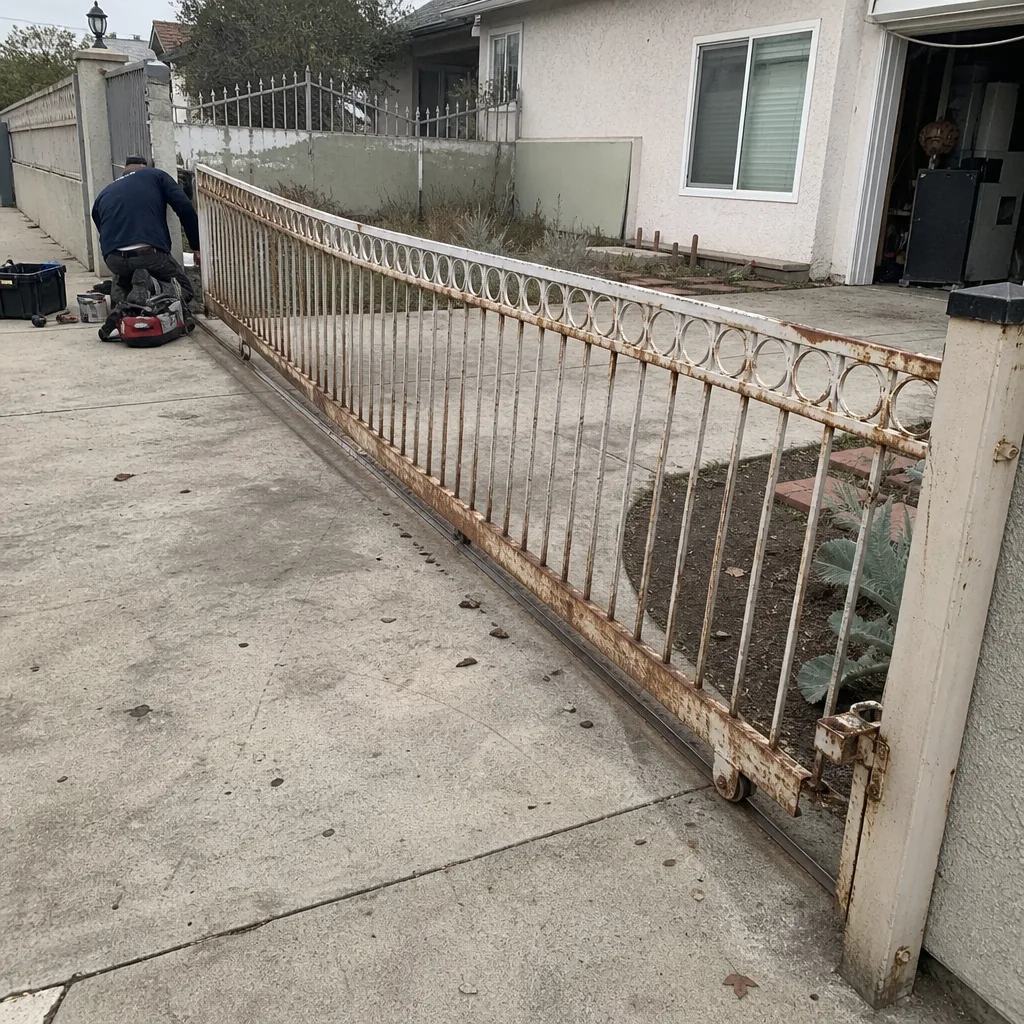 Before
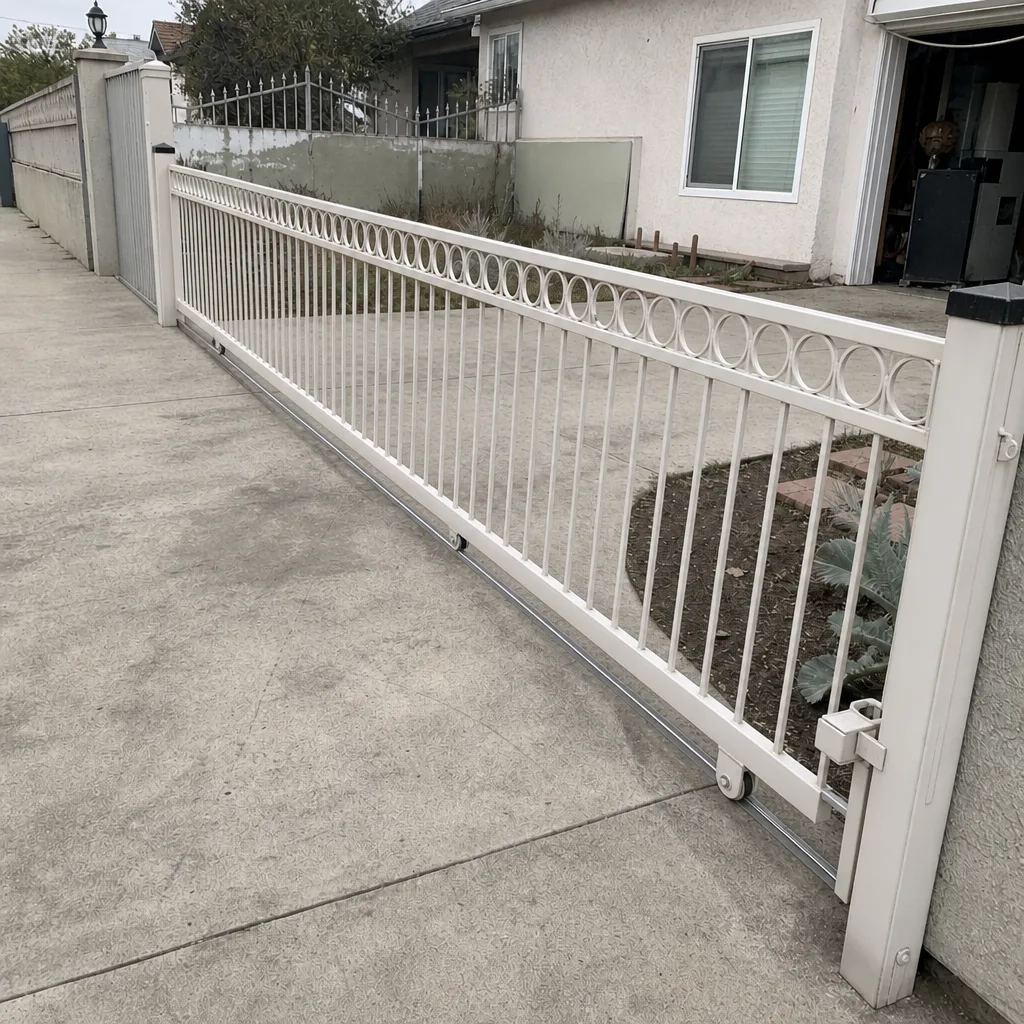 After
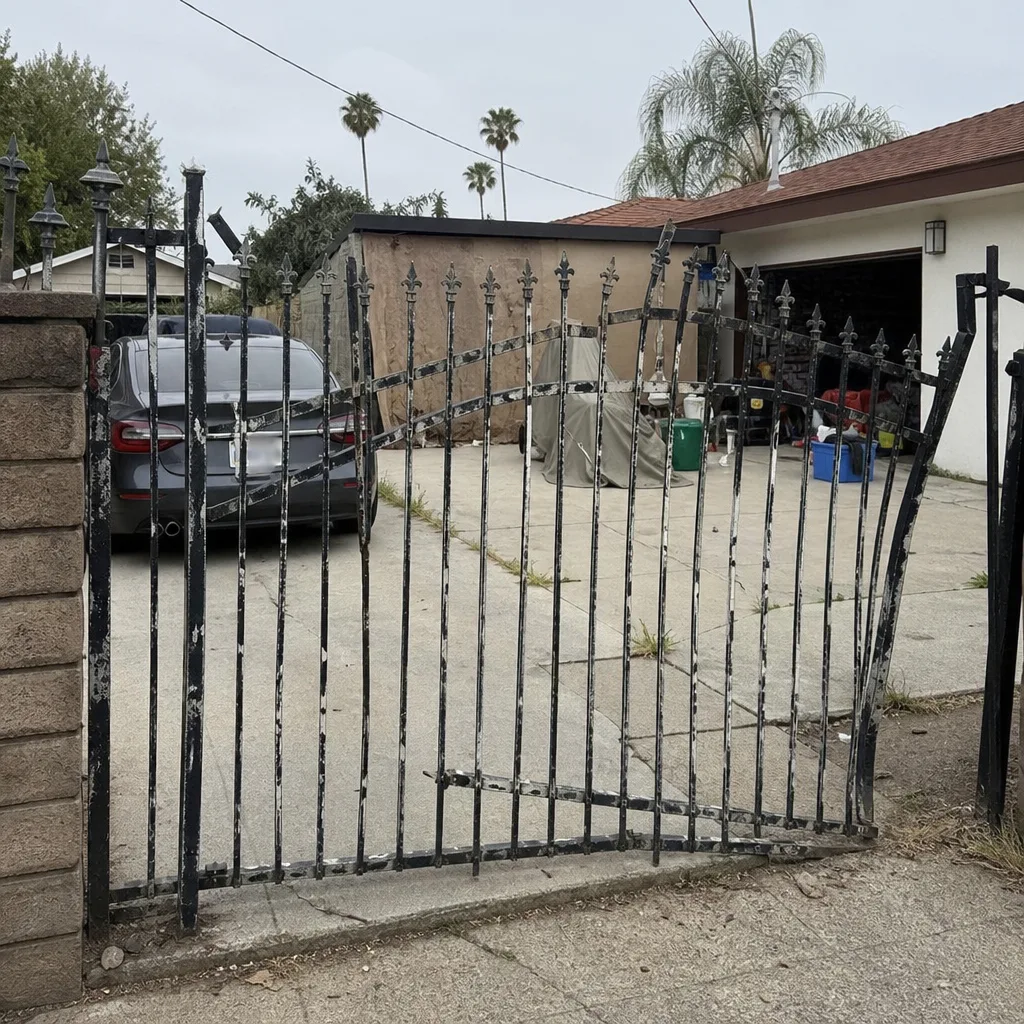 Before
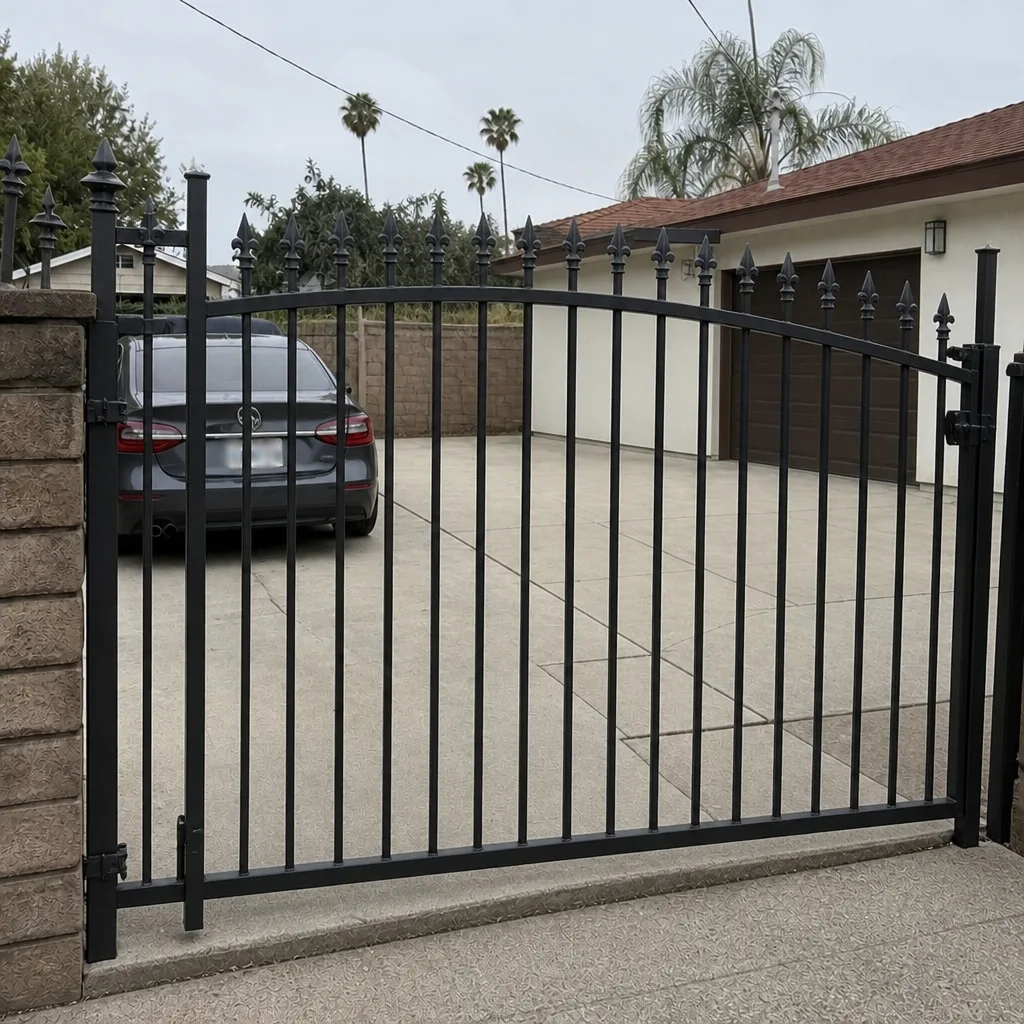 After
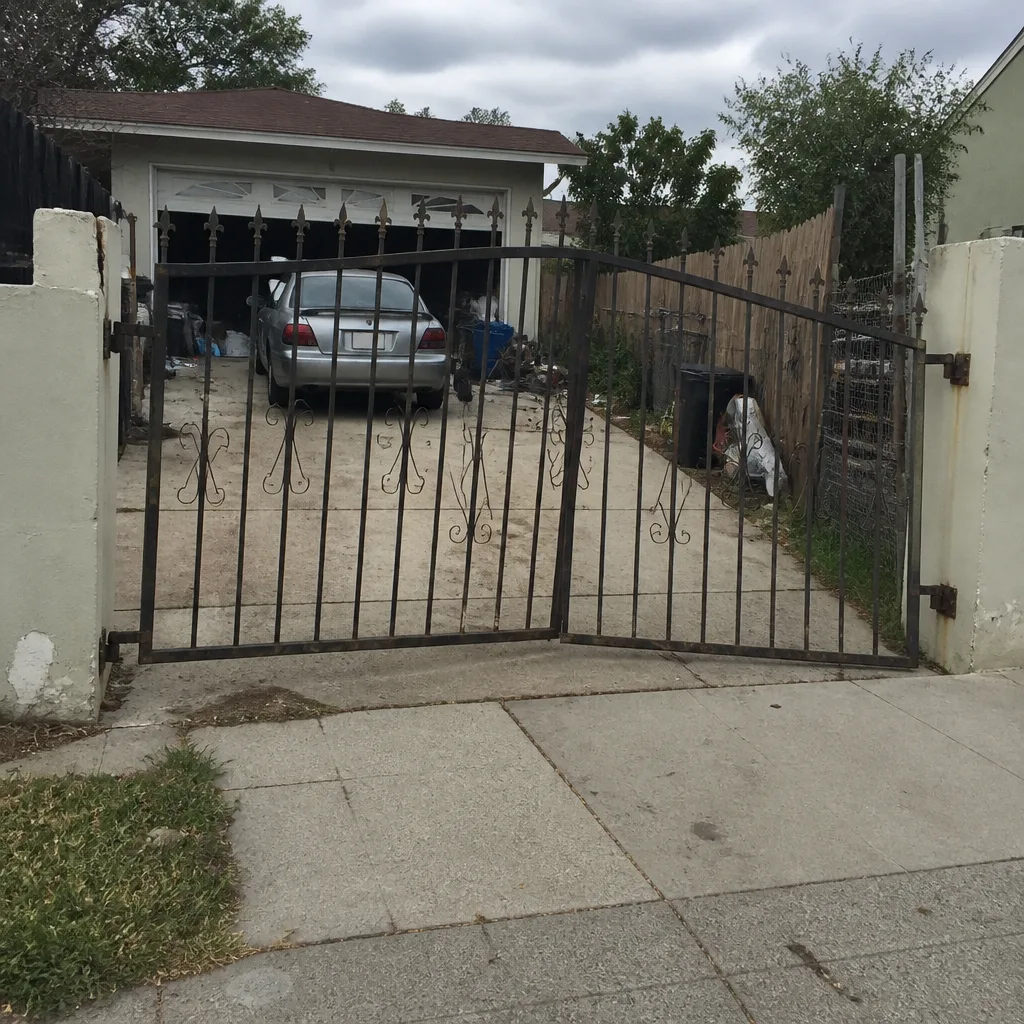 Before
 After