
Last updated November 4, 2026
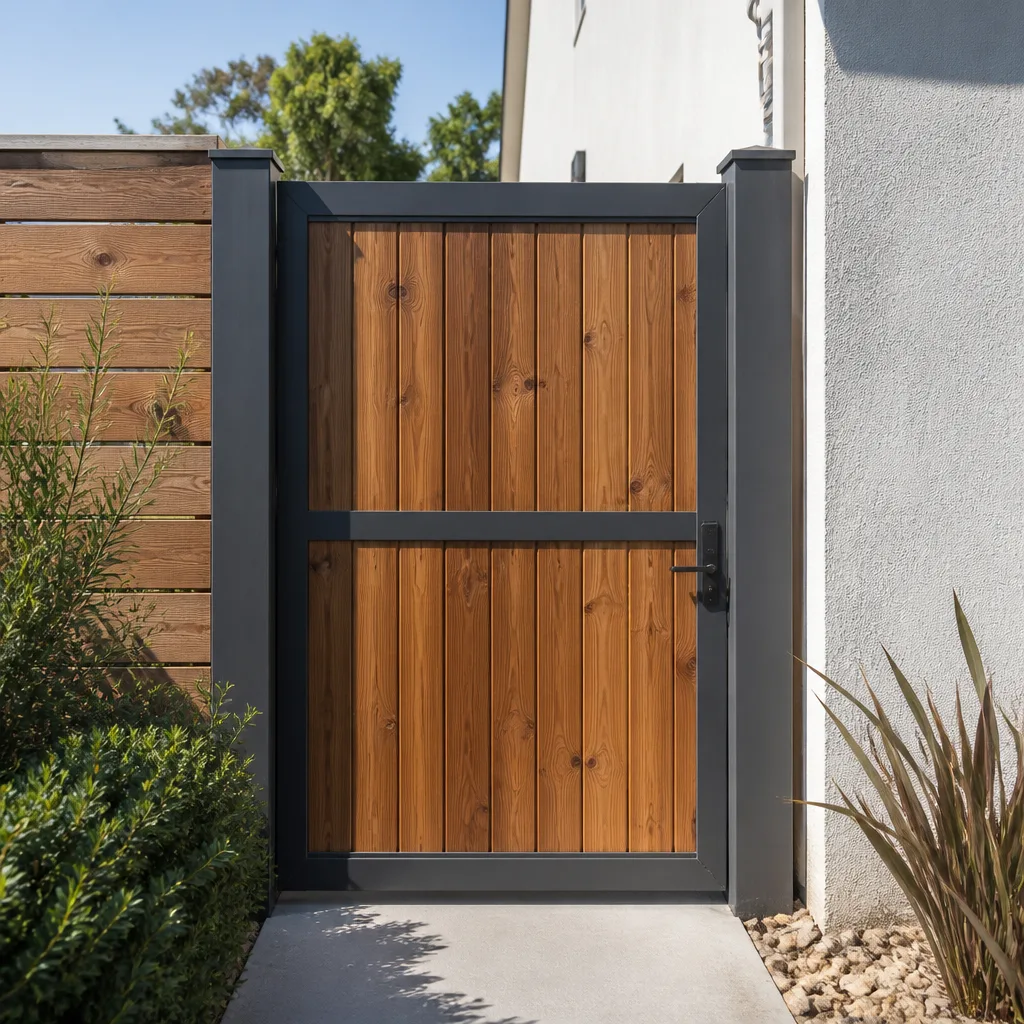 Wood & steel frame
 Wrought iron
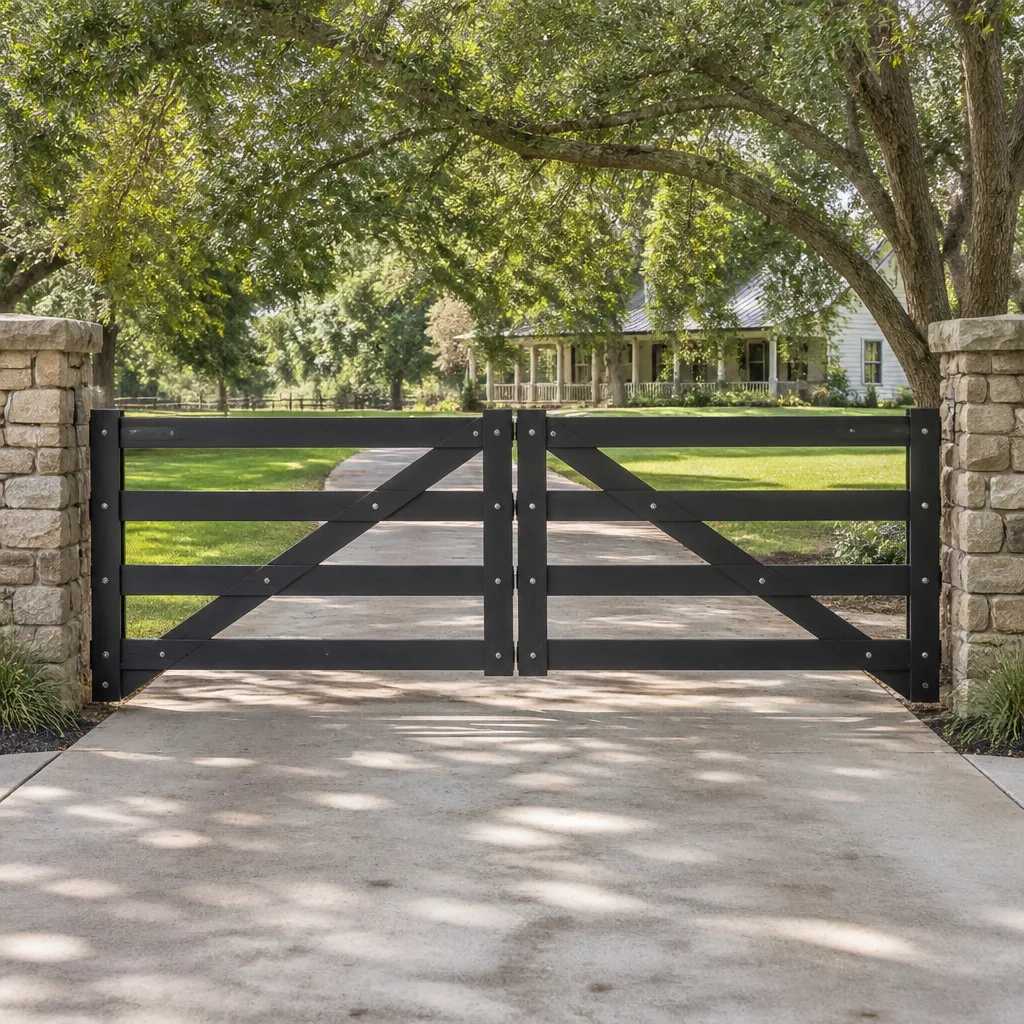 Farm & ranch
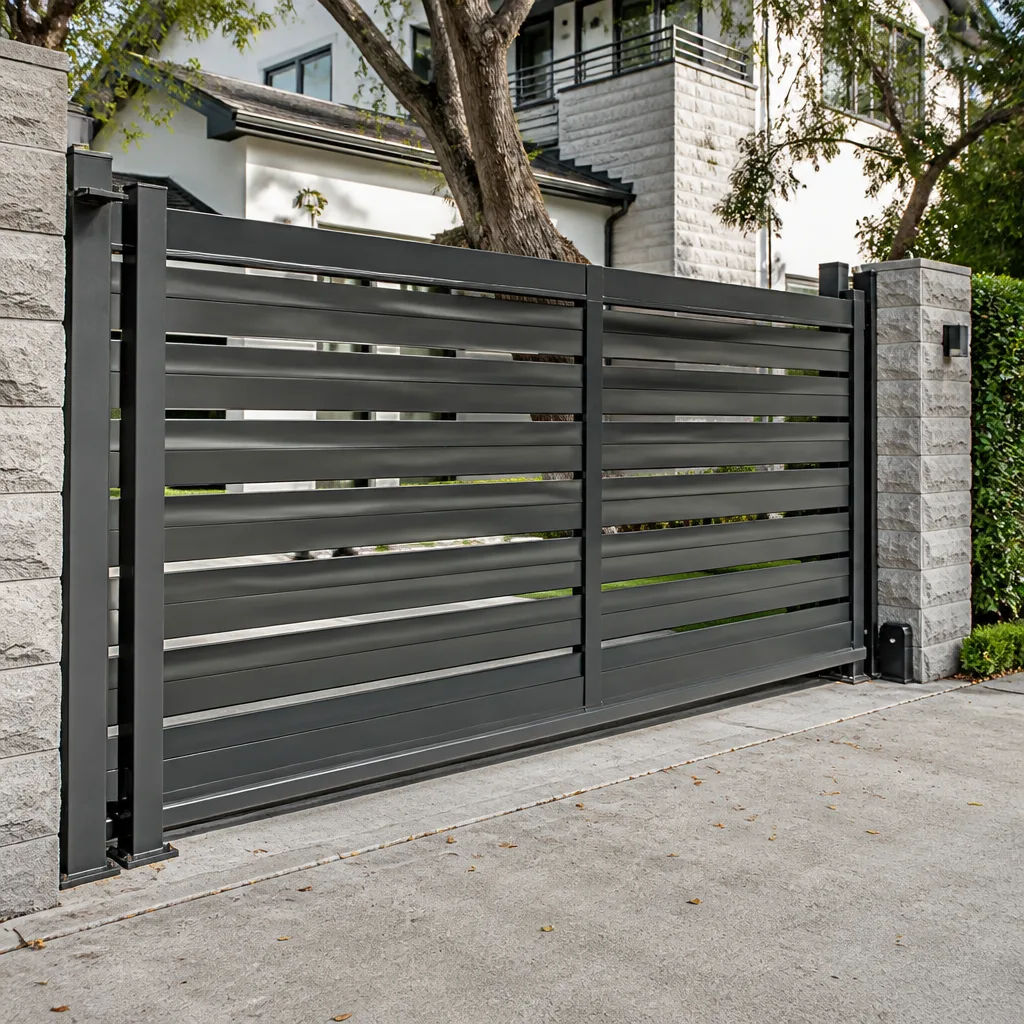 Sliding driveway gates
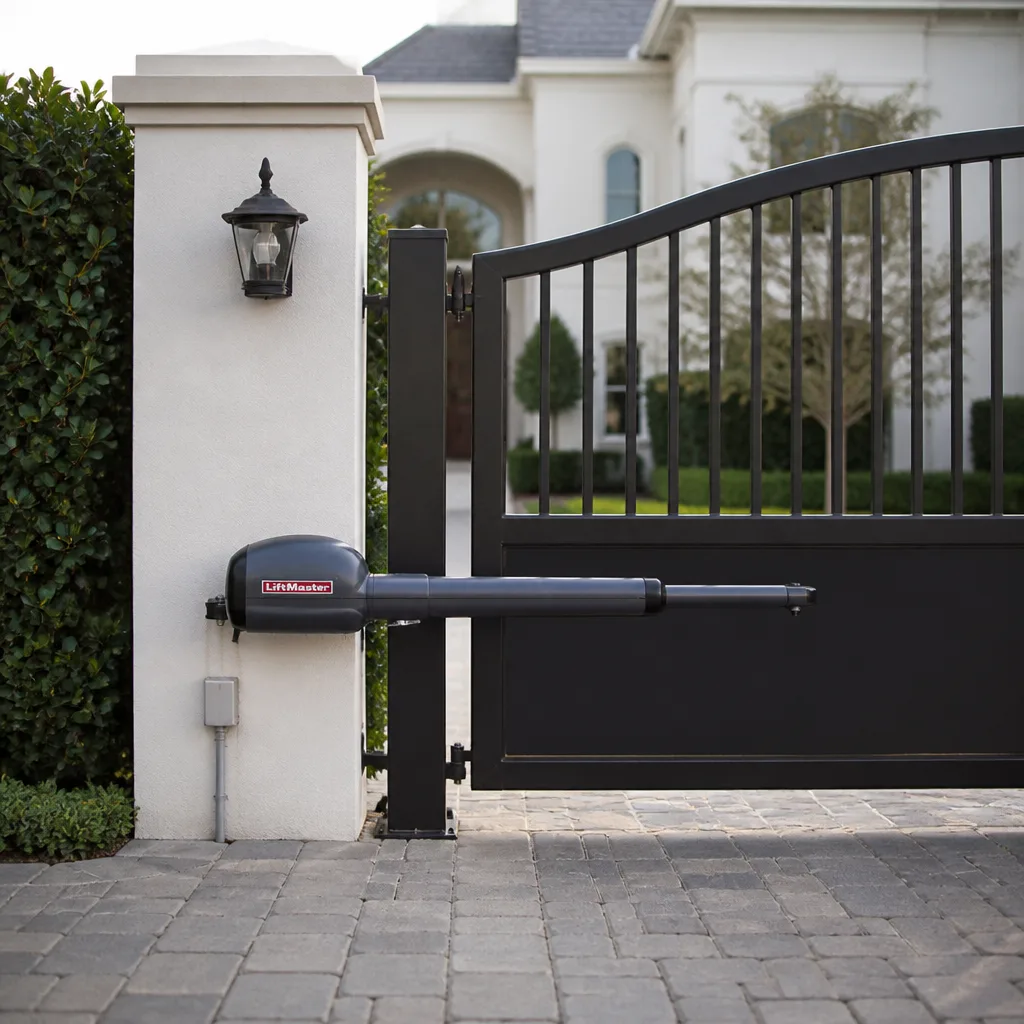 LiftMaster operators
Free on-site gate assessment - hinges, posts, and your LiftMaster or Nice gate operator checked before anything is quoted
The assessment is free and the quote is the invoice.
Get your free estimateGate Repair Warning Signs: A Lakewood Homeowner’s Reference Guide
Most Lakewood homeowners assume a broken gate announces itself with a loud crash or a dead motor. It almost never does. What actually happens is a slow decline: a gate reverses one afternoon for no obvious reason, a remote takes three clicks instead of one, a hinge makes a noise you decide to ignore. This guide will teach you to read those early signals the way a gate technician does, so you can fix a $200 hinge before it becomes a $2,000 operator replacement. Here’s the counterintuitive part: intermittent problems are usually more urgent than complete failures, because a gate that fails cleanly has already told you everything. A gate that works sometimes is still deciding what’s broken.
Styles & brands we work with
- Wrought iron
- Wood & steel frame
- Farm & ranch
- Sliding driveway gates
- LiftMaster operators
Quick Answer
The most serious gate warning signs in Lakewood are mid-cycle reversal, a visible lean or drag, grinding or squealing during travel, remote delays, and blinking LED codes on the control board. Each points to a distinct failure source, and several indicate a gate that could fall or crush someone if ignored. If your gate shows any of these, stop using it and call a gate repair specialist for an inspection, because the written estimate is free and the alternative is usually a much larger repair once the component fails completely.
Table of Contents
- Mid-Cycle Reversal: What It Actually Means
- Slow Gate Operation: Operator Struggle vs. Structural Drag
- Grinding Noises: Reading Sound as a Diagnostic Tool
- Remote Lag and Phantom Stops: The Communication Gap
- Visual Warning Signs on Hinges and Posts
- Reading LED Blink Codes on LiftMaster, FAAC, and Viking Boards
- Why Intermittent Failures Are More Urgent Than Complete Failures
- Common Mistakes to Avoid
- When to Call a Professional
- Frequently Asked Questions
- The Bottom Line
Mid-Cycle Reversal: What It Actually Means
A gate that starts opening, travels partway, then reverses direction mid-cycle is not “glitching.” It’s triggering its own entrapment protection sensor. That sensor is designed to stop and reverse the gate when the operator detects resistance beyond normal parameters. The gate’s controller interprets that resistance as an obstruction, which could be a child, a pet, a car, or nothing at all. When it happens repeatedly with no visible obstruction, something in the system is generating false resistance readings.
The three most common causes we see in Lakewood are:
- Track or wheel misalignment causing the gate to bind partway through travel. The operator senses the load spike and reverses.
- Failing capacitors or motor windings that can’t maintain smooth torque, so the gate stutters and the board reads the stutter as an obstruction.
- Obstruction sensor sensitivity settings that are too tight for the gate’s weight, triggering false positives on every cycle.
Here’s what matters: every time that gate reverses, it’s protecting you from something the system perceives as a problem. The fact that it reverses instead of pushing through is a sign that the safety circuits are working. What’s failing is the mechanical or electrical system underneath them. In our experience, a Ghost Controls operator that reverses mid-cycle is often fighting a wheel that’s worn flat on one side, which creates exactly the kind of load spike the board interprets as an obstruction. A BFT hydraulic operator showing the same symptom points more often toward low fluid levels or a pressure valve that needs adjustment.
This is not a symptom to reset and forget. The gate is telling you it’s working harder than it should. Every false reversal is a data point, and the pattern of when it happens, at the same spot in travel, near the same time of day, after rain, tells a technician exactly where to look. If your gate reverses mid-cycle, try running it without the remote using the manual release, if you know how to do so safely. If it still reverses, the problem is mechanical. If it only reverses on remote activation, the issue may be in the control board or photo eye alignment.
Slow Gate Operation: Operator Struggle vs. Structural Drag
A gate that moves slower than it used to is registering one of two problems: either the operator is losing power, or the gate itself is getting harder to move. Those are opposite problems with opposite fixes, which is why a slow gate is one of the most commonly misdiagnosed symptoms in the trade. Homeowners replace motors when the real issue is a hinge that’s been binding for six months.
Here’s how to tell the difference in Lakewood, before you call anyone:
- Release the operator using the manual disconnect handle or key (if your system has one). Push the gate by hand.
- If the gate moves easily by hand but struggles under power, the operator is the issue. You’re looking at a motor, capacitor, gear train, or control board problem. A Linear operator that’s slow under power but smooth manually is most likely a failing capacitor or worn gear.
- If the gate drags by hand, even a little, the problem is structural or mechanical. You’re looking at hinges, wheels, track, or post alignment. The operator was doing the heavy lifting, and now it’s burning itself out trying to overcome the extra friction.
That third scenario is the one that worries us most. A gate that’s too heavy to move is a gate that can snap a hinge pin or tear a post anchor. And if you have a Viking operator, the control board has current-sensing circuitry that’s now working overtime. It will fail at some point. When it does, the repair involves the operator and the underlying structural problem, not just one or the other.
Lakewood’s older residential neighborhoods have a lot of gates that were installed decades ago, which means post settling is a real factor in gate drag over time. A post that moves a quarter inch out of plumb changes the gate’s entire geometry. Every cycle scrapes a little more material off the wheels or hinges. The operator compensates until it can’t. Write down when you first noticed the slow operation. That timeline helps a technician determine whether you’re dealing with a failing component or an ongoing structural shift.
Grinding Noises: Reading Sound as a Diagnostic Tool
Squealing and grinding are two different sounds with two different levels of urgency. Squealing is usually a dry or worn bearing, a hinge pin, a wheel that’s lost its lubrication. It’s a warning sign you should address in weeks, not months. Grinding is metal removing itself from metal. It’s a repair you should schedule before the gate fails under load.
For an electric gate, sound is the cheapest diagnostic tool you own. Here’s a basic sound-to-cause map we use in the field:
- Rhythmic squeak, once per cycle: a dry hinge or wheel bearing. Often resolved with proper lubrication, but a dry bearing that’s been squeaking for months has likely already pitted, which means replacement is the actual fix.
- High-pitched squeal from the operator housing: a failing capacitor or belt slipping in a belt-driven unit. On a FAAC hydraulic unit, a whine can indicate the pump is cavitating, which is a fluid level or pressure issue.
- Low grinding or grating on the track: worn wheels dragging metal against the track, or a gate that’s dragging on the ground because a hinge sagged. This is structural damage in real time.
- Clunk or thunk at the start or end of travel: loose mounting hardware, a post anchor working itself free, or a limit switch out of adjustment.
A grinding gate in Lakewood is not going to heal itself in the mild climate. The dry air and steady temperatures mean a lubrication failure stays a lubrication failure, and it compounds with every cycle. The moment a gate starts making a sound it didn’t make before, you have a narrow window where the fix is small and cheap. Grinding is the sound that closes that window.
Remote Lag and Phantom Stops: The Communication Gap
Your remote sends a signal to a receiver. The receiver tells the control board to move the gate. If any one of those links is weak, you get lag: a delay between pressing the button and seeing the gate respond. Phantom stops, where the gate starts and then halts for no visible reason, are a related symptom. Both point to a communication or signal integrity problem.
The most common causes in Lakewood, in order of frequency, are:
- Remote battery voltage drop. A remote with a weak battery sends a weak signal, and the receiver may take longer to decode it. When was the last time you changed the battery?
- Receiver antenna damage or misplacement. Antennas get bent, corroded, or tucked behind metal enclosures that block signal. A Ghost Controls receiver with a damaged antenna will often work from ten feet away but not fifty.
- Control board signal processing lag. Older boards, or boards with loose terminal connections, can develop a delay between receiving the signal and activating the operator relay.
- Interference from nearby electronics or structural changes that introduced new signal-blocking material between the remote and the receiver.
Lag alone is rarely an urgent safety issue, but it’s a significant usability problem. Worse, it’s often misattributed to “the gate being old” when the fix is a new battery or a relocated antenna. If your remote is slow for a few days, check the battery first. If the problem persists, the issue is in the receiver or board, and that’s a bench diagnosis, not a guess.
Visual Warning Signs on Hinges and Posts
The moving parts of a gate get all the attention, but the true structural warning signs are on the stationary parts: the hinges, the post, the anchor bolts, the track. This is where pre-failure damage accumulates, and it’s the easiest area for a homeowner to inspect with no tools beyond a flashlight and a willingness to look.
Here’s a five-point visual inspection you can do in five minutes, in this order:
- Look at the hinge-to-post connection. Cracks in the post around the hinge plate, rust stains running down from the bolt holes, or a visible gap between the plate and the post all mean the hinge is working loose. A gate that pulls its hinges out of the post can fall, and a falling gate can kill someone.
- Look at the hinge-to-gate connection on a metal gate, watch for hairline cracks radiating from the weld points. On a wooden gate, look for wood rot or splitting around the screw holes.
- Check the post itself. Lean a level against it. A post that’s drifted out of plumb, even slightly, changes the gate’s entire swing or slide geometry and accelerates every other wear item.
- Look at the bottom rail or ground clearance. If the gate has started scraping the ground or the clearance has changed from one side to the other, something has settled. In Lakewood’s established neighborhoods, this is often years of soil settlement finally catching up with a gate post.
- Examine the track on a slide gate. Look for flat spots, worn-away metal, or places where the track has been struck by the gate itself, because that’s evidence of a wheel failure that’s already underway.
None of these require special knowledge. They require looking at the same gate you walk past every day with fresh eyes. The reason these signs get ignored is that they’re gradual. A crack grows. A post leans. The change from “fine” to “failing” can take months, which is exactly when an inspection catches the cheap fix.
Reading LED Blink Codes on LiftMaster, FAAC, and Viking Boards
Every major gate operator brand has a diagnostic language built into the control board, and it’s displayed through LED blink patterns. Homeowners almost never read these codes, which is a shame, because they’re the closest thing a gate has to a direct voice. The board is literally telling you what it thinks is wrong, usually in a specific number of blinks or a repeating color pattern.
The general pattern works like this across most brands, though the exact codes vary by model:
- Solid green LED: power is present and the board is operating normally.
- Solid red or flashing red: fault condition, often in the safety circuit, which covers photo eyes, edge sensors, or entrapment protection.
- Blinking patterns of two, three, or four: these map to specific fault codes in the model’s manual. Common meanings include obstacle detection, motor overload, limit switch error, or a wiring fault on the safety inputs.
On a LiftMaster board, a flashing LED sequence is the board’s way of telling you where in the system the fault lives, not just that a fault exists. On a Viking board, the same concept applies: the blink code corresponds to a specific diagnostic condition, whether that’s an edge sensor fault, a motor issue, or a loop detector wiring problem. FAAC boards are similarly self-diagnosing, with LED patterns that distinguish between logic issues and motor circuit faults.
The point is not for you to memorize every code for every brand. The point is that when a board starts blinking anything other than its normal status pattern, it’s not a random glitch. Write down the pattern. Count the blinks. Most boards will repeat the pattern continuously, so you have time to observe carefully. Then call an electric gate repair technician who can read the code against the model’s documentation without guessing. It cuts diagnostic time dramatically and it often means the difference between a small component replacement and a full board swap.
Why Intermittent Failures Are More Urgent Than Complete Failures
This is the principle most homeowners get exactly backwards. A gate that fails completely is a known quantity. The motor is dead, or the board is fried, or the hinge finally snapped. You know what’s broken, you schedule the repair, and you’ve got a functioning gate again. A gate that fails intermittently is a system trying to tell you something while it’s still capable of moving. Every intermittent failure is the final warning before the complete one.
Here’s the logic. A component on the edge of failure, a capacitor that charges sometimes, a limit switch that makes contact intermittently, a wire with a connection that opens in certain temperatures, produces exactly one symptom: works sometimes, fails other times. The failure is unpredictable because the component’s behavior is unpredictable. When that component finally goes for good, it usually takes out whatever it was connected to, because the system has been running with abnormal loads the whole time.
An intermittent operator problem that gets ignored can turn into a burned-out motor transformer. An intermittent limit switch failure can become a gate that crashes into its end stop and bends the frame. An intermittent board fault can become a completely dead board, and boards are among the most expensive single components on an electric gate system.
In Lakewood, where gates get used multiple times a day, every day of the year, that wear-cycle compresses. The gate that works “most of the time” is being tested hundreds of times a month. The intermittent failure is not a quirk you can live with. It’s a component that’s already broken and waiting for the most inconvenient moment to prove it.
Common Mistakes to Avoid
- Lubricating everything with WD-40 as a first response. WD-40 is a solvent and water displacer, not a long-term lubricant for gate hinges and bearings. It can wash out whatever grease was there and leave the metal drier than before.
- Resetting the breaker or power cycling the operator to clear a fault code. Every time you power cycle a faulted board, you erase diagnostic information it was trying to communicate. Unless you know exactly what the code meant, you just deleted your only clue.
- Adjusting the obstruction sensitivity to stop mid-cycle reversals. If the gate reverses because it’s binding, loosening the safety threshold doesn’t fix the binding. It tells the board to ignore the problem, which turns a false entrapment signal into a real one.
- Ignoring a slow gate because it still works. Slow travel is your earliest and most reliable warning that something is wearing out. The “still works” phase is the cheap-repair window. Wait too long and the operator damages itself permanently.
- Believing a gate that reverses sometimes is “just sensitive.” Sensors don’t become sensitive out of nowhere. If the reversal behavior is new, something in the system changed, and that something will not fix itself.
- Replacing the remote when the receiver is the problem. A new remote paired to a failing receiver gets you exactly the same symptoms. Check the simplest causes first, then the receiver, then the board.
- Skipping a professional inspection when you’re unsure. A gate repair technician can diagnose most warning signs in a single visit, and the cost of the inspection is typically far less than the cost of a misdiagnosed DIY attempt that fails.
When to Call a Professional
Call a gate repair specialist the moment you notice a mid-cycle reversal, a change in travel speed, a grinding noise, visible post or hinge damage, or a pattern of intermittent failures. These are not cosmetic issues. They are early-warning signs that a component has already begun to fail, and the longer you wait, the more expensive that component becomes to replace, and the more collateral damage it causes on its way out. Waverly Gate Repair offers free estimates throughout Lakewood, and a single inspection can map every warning sign to its root cause before any work is done. Call (866) 925-0168 for a free estimate. We answer 24/7. Fast dispatch from 7am to 7pm, Sunday through Friday.
As a gate-only specialist, Waverly Gate Repair works across the brands homeowners actually have, LiftMaster, linear, Viking, BFT, Ghost Controls, and more. When you call about a reversing gate or a grinding slide gate, you’re not talking to a fencing company that installs hinges on the side. You’re talking to technicians who read control board codes and diagnose motor strain the way a mechanic reads an engine. That focus means faster, more accurate diagnosis, and it means we’re able to repair almost any gate system you already own, rather than telling you it needs to be replaced because we only work on certain brands.
Frequently Asked Questions
A mid-cycle reversal means the gate’s entrapment protection sensor is detecting resistance, which can be caused by track misalignment, a binding wheel or hinge, low hydraulic fluid (on hydraulic models), or a motor that’s failing and can’t maintain smooth torque. The reversal is the safety system working correctly, and the underlying mechanical or electrical fault needs to be diagnosed. Call (866) 925-0168 for an exact diagnosis in Lakewood. We answer 24/7.
Gate repair costs vary by the component and the extent of the damage. A hinge replacement is a small job. A new control board is a significant one. A fallen gate that needs structural remediation and a new operator is a major repair. In Lakewood, the most affordable approach is always an early diagnosis, before the failing component takes out the components around it. Your written estimate sets the final price, and the estimate is free. Call (866) 925-0168 for a quote.
Yes. A dragging gate is usually the result of a sagging hinge, a bent post, or a wheel that’s failed and is dragging the gate against the track or ground. The fix depends on which of those is happening, and it needs to be addressed before the operator burns out trying to move the extra weight. A gate repair specialist can inspect the gate in Lakewood and tell you exactly what’s dragging and why. Call (866) 925-0168 for a free estimate.
Intermittent operation means a component is on the edge of failure, not that the gate has a minor quirk. It usually indicates a failing capacitor, a limit switch with an intermittent contact, a loose wiring connection that opens under certain conditions, or a control board that’s marginal. Intermittent failures are typically more urgent than complete failures, because the final failure often damages other components in the system. Book a diagnostic visit before it fails completely. Call (866) 925-0168.
We work on what you already have. Our technicians are experienced across nine major gate and operator brands, including LiftMaster, FAAC, BFT, Linear, Viking, Ghost Controls, DoorKing, Elite, and Mighty Mule. That brand-agnostic approach means you’re never told “we don’t service that brand” and pushed into a full replacement just because a technician doesn’t recognize the board. If your gate has a specific brand failure, we can diagnose and repair it. Call (866) 925-0168 in Lakewood for a free estimate.
We answer the phone 24/7 and dispatch technicians from 7am to 7pm, Sunday through Friday. For most warning-sign diagnostics and gate repairs, we can schedule same-day service. Same-day repair depends on the specific fault and whether parts are needed, but the estimate is always free and the written quote sets the final price. Call (866) 925-0168 to book.
The Bottom Line
Every gate failure announces itself in advance. The warning signs are specific, observable, and available to any homeowner who’s willing to look: a mid-cycle reversal, a slower travel speed, a new grinding noise, a remote that lags, a post that’s drifted out of plumb, a blink code on the control board that appeared without explanation. None of these are quirks. Each one maps to a specific mechanical or electrical fault, and each one gets more expensive the longer it’s ignored. The gate that “still works” is in the cheapest repair window right now. When it stops working for good, that window is closed. If you’re seeing any of the signs in this guide, call (866) 925-0168 to book a free estimate in Lakewood. We answer 24/7, and fast dispatch runs from 7am to 7pm, Sunday through Friday. The earlier a gate repair specialist sees your gate, the smaller the repair stays.
Written by the team at Waverly Gate Repair, serving Lakewood since 2013.
See the difference
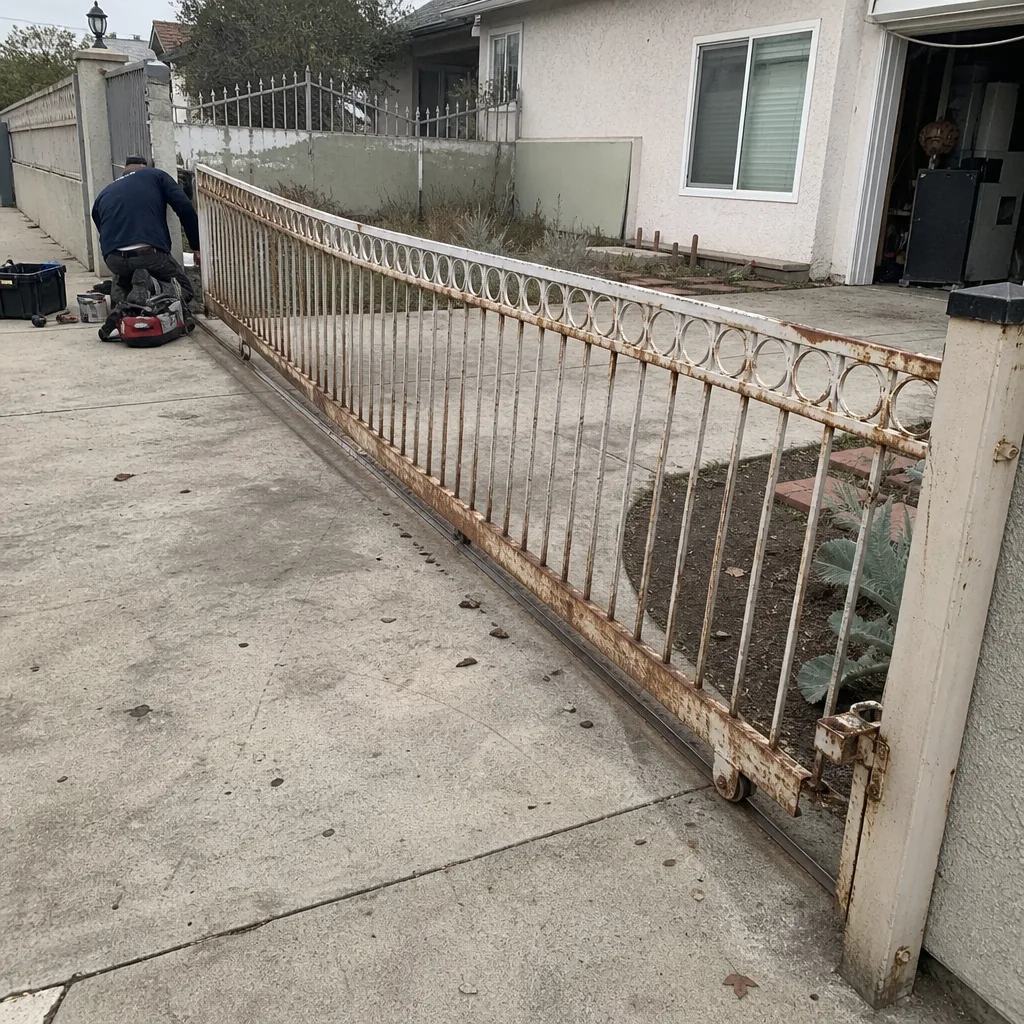 Before
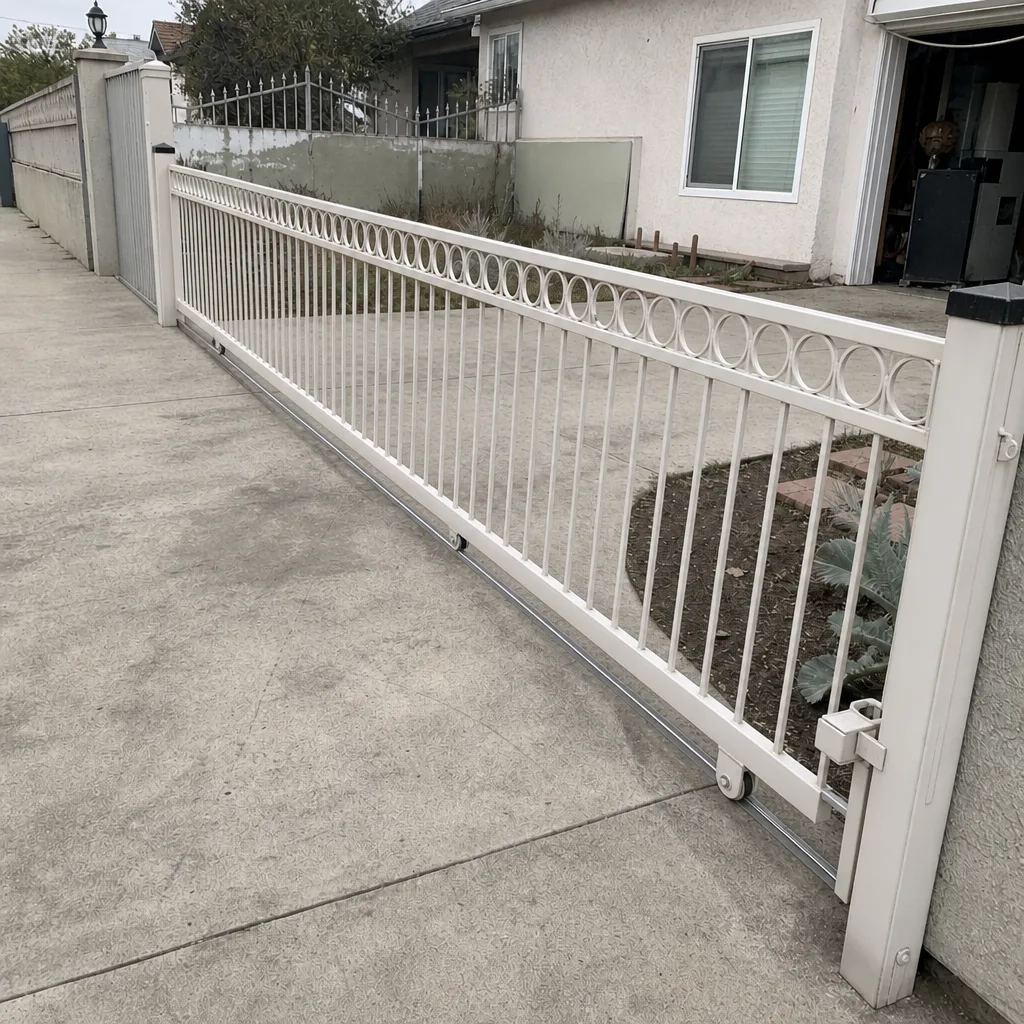 After
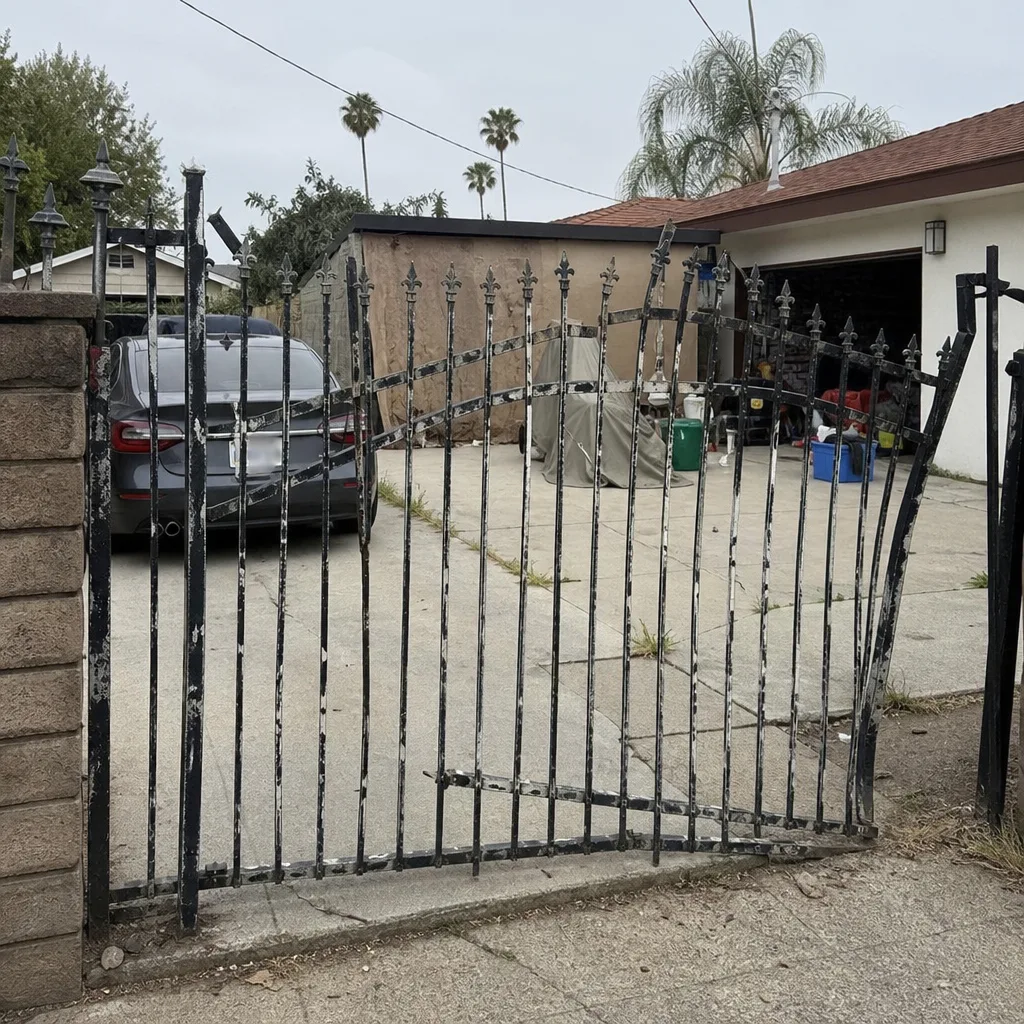 Before
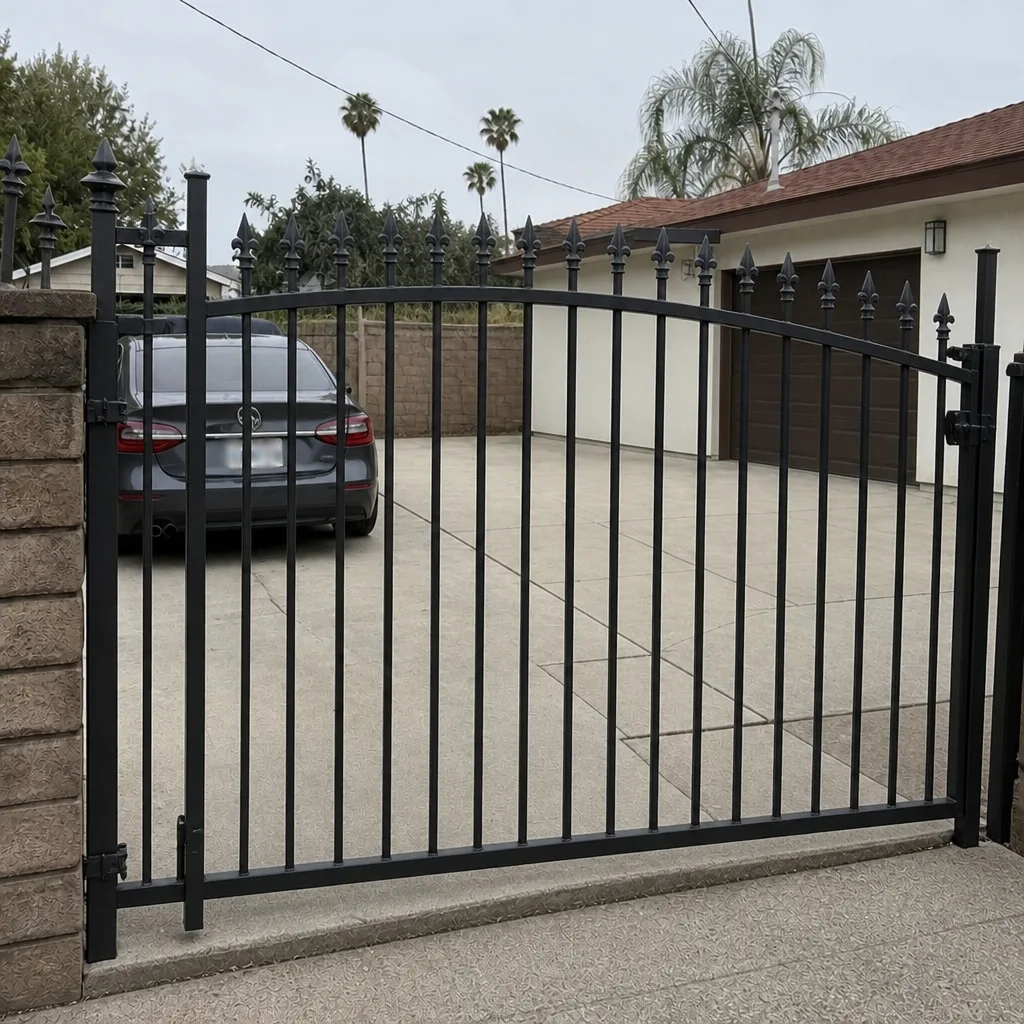 After
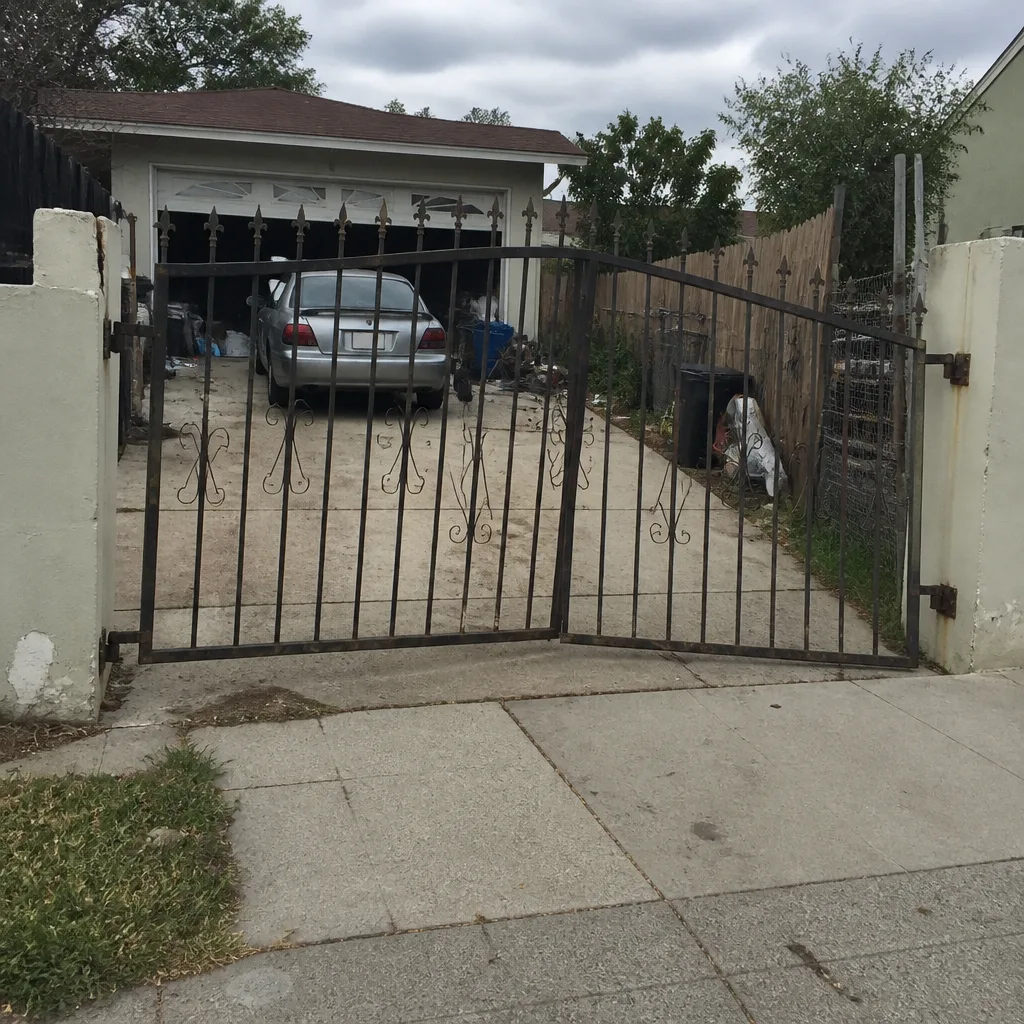 Before
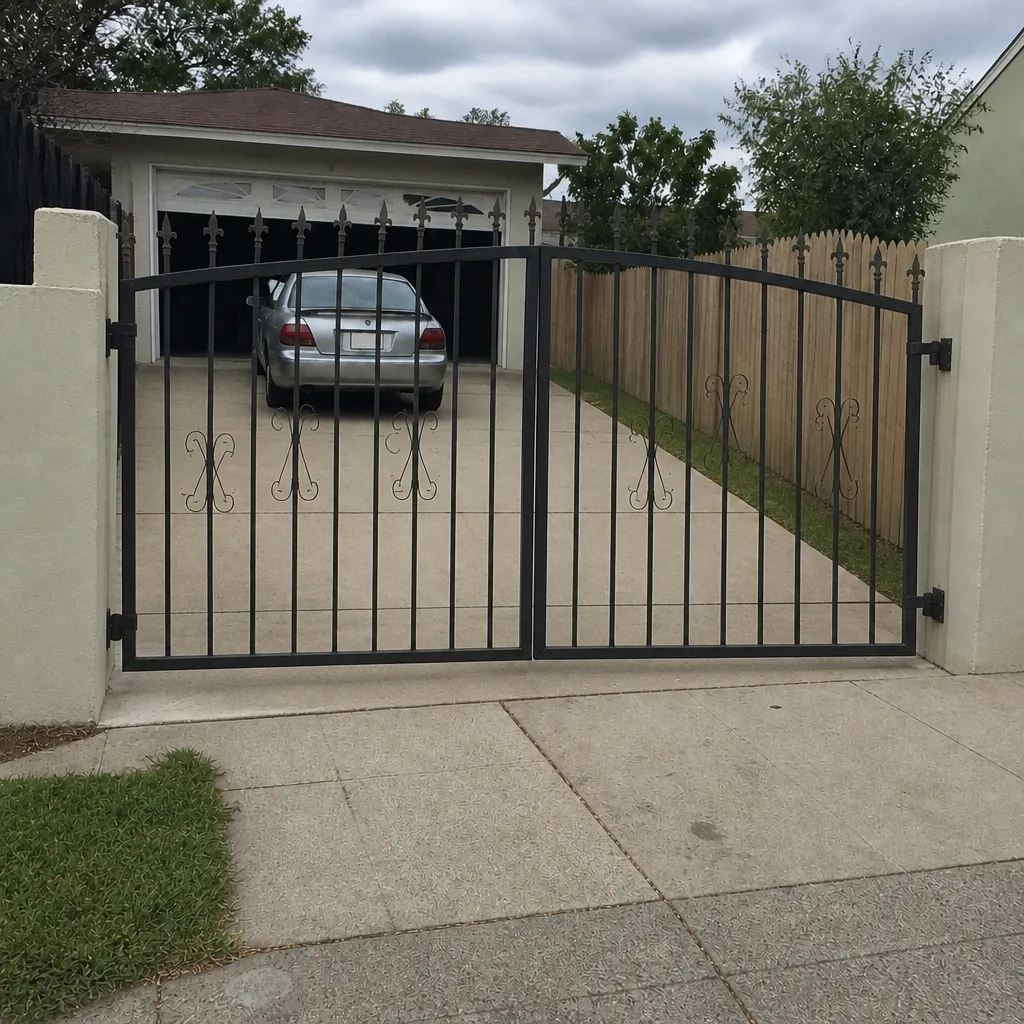 After